Safe and Functional Access Throughout Your Property
Patios, Walkways, and Steps in Fort Worth for smooth transitions, proper drainage, and surfaces that resist cracking and wear
RMC Concrete & Construction LLC installs custom concrete patios, walkways, and entry steps for residential properties across Fort Worth and throughout Texas, creating functional outdoor surfaces that connect spaces, improve curb appeal, and hold up under daily foot traffic and weather exposure. You need pathways that don't settle unevenly, steps that remain level and safe, and patios that drain properly without developing cracks or surface damage. The installation begins with layout planning, grading to direct water away from structures, and forming to define edges and elevations.
The work involves excavating to the correct depth, compacting the base material, and pouring concrete in sections that account for expansion joints and slope. Walkways are typically four inches thick with a slight grade to prevent water from standing, while steps require precise forming to ensure uniform riser height and tread depth. Patios are finished with textures that provide traction when wet, and all surfaces are cured to develop strength without surface cracking. In Texas, heat accelerates curing, so timing and curing methods are adjusted to prevent premature drying.
If you're planning a patio, walkway, or step installation in Fort Worth, RMC Concrete & Construction LLC provides design and construction that prioritizes safety, drainage, and long-term durability.
How Patios, Walkways, and Steps Are Built
Your project starts with site measurement and layout, followed by excavation and base preparation using compacted gravel or crushed stone. Forms are built to outline the pour area and hold the concrete at the correct elevation. For steps, each riser is formed individually, with reinforcement added to prevent cracking at stress points. The concrete is poured, spread, and leveled using screeds and hand tools, then finished with a broom, trowel, or stamp depending on the desired texture. Control joints are cut to manage shrinkage cracks, and the surface is protected during curing using water, plastic sheeting, or curing compounds.
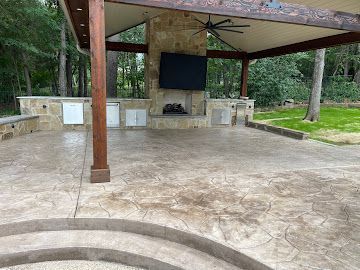
After installation, you'll see a smooth, level surface with defined edges, consistent slope for drainage, and a finish that provides traction without being rough underfoot. RMC Concrete & Construction LLC ensures that walkways transition smoothly between different elevations, that steps are uniform in height and depth, and that patios connect to existing structures without gaps or uneven joints. The result is a durable, low-maintenance surface that handles foot traffic, furniture placement, and weather exposure without cracking or settling.
Most residential walkway and patio projects are completed within a few days, while step installations may take longer due to the complexity of forming and finishing multiple levels. Decorative finishes, curved layouts, and projects that require extensive grading will extend the timeline. Weather conditions affect scheduling, and concrete cannot be poured during rain or extreme heat without compromising the finish quality.
What You Need to Know Before Installation
Patio, walkway, and step projects in Fort Worth often bring up questions about design, safety, and how the surfaces will perform over time. Here's what homeowners ask most frequently.
What finish is best for a patio that gets wet?
A broom finish provides texture that reduces slipping when the surface is wet from rain or sprinklers, while a smooth trowel finish looks cleaner but can become slippery and is better suited for covered areas.
How wide should a walkway be?
Standard residential walkways are at least three feet wide to allow comfortable single-file walking, but four feet or wider is better if you want two people to walk side by side or if the path is heavily used.
Why do steps crack at the corners?
Steps experience concentrated stress where the tread meets the riser, and without proper reinforcement or control joints, the concrete will crack at these points as it shrinks during curing.
How do you prevent a patio from holding water?
The patio is poured with a slight slope, typically one-eighth inch per foot, that directs water away from the house and toward the yard or a drainage feature, preventing puddling and staining.
What's the difference between a standard and decorative finish?
A standard finish uses a broom or trowel to create texture, while decorative finishes involve stamping, staining, or adding exposed aggregate for a more detailed appearance that costs more and requires additional labor.
RMC Concrete & Construction LLC works with homeowners across Texas to install patios, walkways, and steps that improve access, appearance, and property value. If you're ready to move forward with a project in Fort Worth, contact the team to discuss your layout, finish options, and timeline.